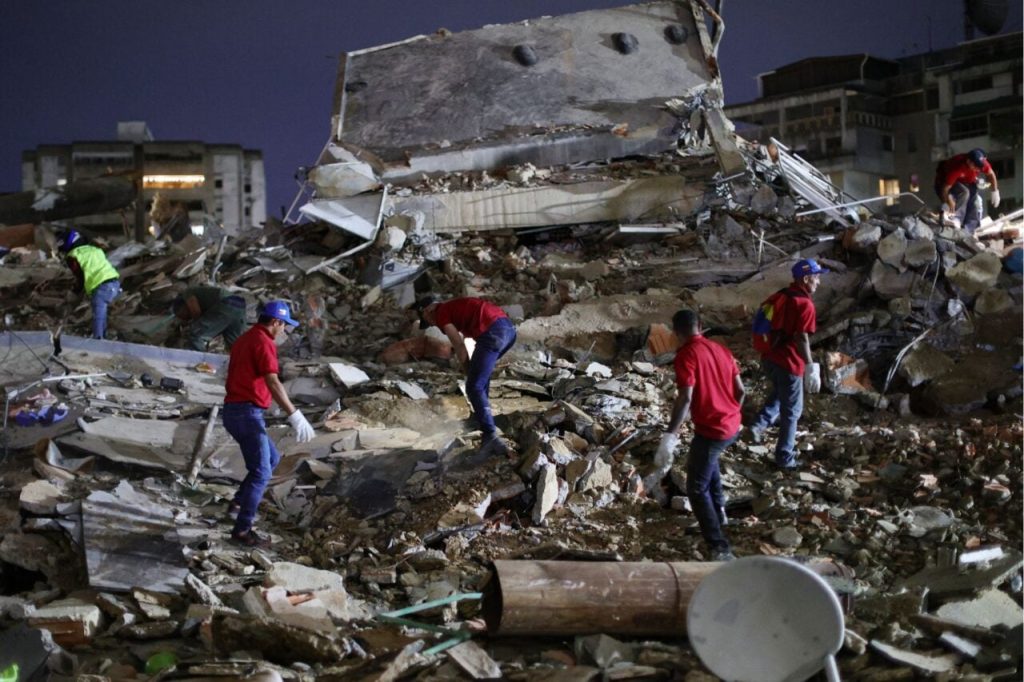
Four Earthquakes in three different places occurred within half an hour. Experts say these quakes are not related.
On Wednesday, June 24, a magnitude 7.2 earthquake struck the South American nation of Valenzuela alongside Japan’s 6.9 earthquake, hours apart from Northern California’s 5.6 magnitude earthquake that hit its rural area within the same day.
The tremors that occurred in the span of eight hours has prompted several online speculations, overwhelmed whether the recent event were related. Experts said that they are not correlated. They state that the quakes happen to occur simultaneously due to the tectonic plates dividing into several broken pieces and continuously moved along the earth’s crust. “Earthquakes happen every day all over the world. Most of them happen far from people,” William Barnhart said. He states that the earthquakes that occurred in Japan and California are most likely to be coincidental. The two magnitude 7-plus earthquakes in Venezuela were caused by a fault system that moves in a manner comparable to the San Andreas fault. In Venezuela, the Caribbean Plate slides rightward relative to the South American Plate along an elaborate sequence of dextral slip faults known as the Boconó-Morón-El Pilar Fault sequence.
In addition, Venezuelan and Californian earthquakes, the Japan earthquake was caused by a thrust fault, which includes the movement of plates along an inclined plane. In Honshu, the Pacific Plate dips beneath the Okhotsk microplate along a fault plane angled to the west, known offshore as the Japan Trench. As seismologists collect more data on these quakes, the mechanics underlying them will become apparent, but there is unlikely to be any connection between them. Wednesday’s events serve as a warning that seismically sensitive areas can experience a significant earthquake at any time, emphasizing the crucial need of preparation /Phoemella Contreras