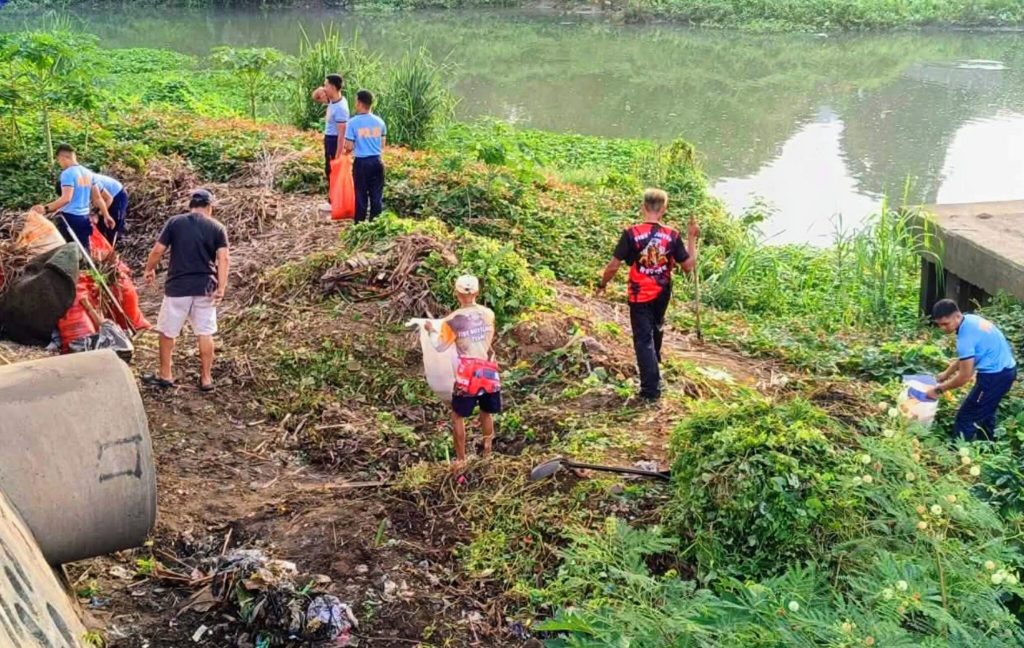
In observance of the National Disaster Resilience Month, it is estimated that 1.4 metric tons of waste from the Iyam River was removed on Wednesday, July 15, 2026 by volunteers.
According to the City Environment and Natural Resources Office (CENRO), volunteers collected 105 sacks of waste from the riverbanks. The collected waste included polyethylene terephthalate (PET) plastic bottles, various plastic materials, household garbage, construction debris, and biodegradable waste.
Authorities said the biodegradable waste was buried instead to allow it decompose naturally and be converted into compost.
The cleanup brought together personnel from the city government, the Philippine National Police, the Bureau of Fire Protection, the Philippine Coast Guard, barangay and Sangguniang Kabataan officials, and community volunteers.
Authorities also renewed their call for residents to stop dumping garbage and human waste into waterways, saying some riverside communities have long used the rivers for waste disposal, laundry, and sanitation.
Lucena’s urban center is bordered by the Dumacaa River on the east and the Iyam River on the west. The two rivers converge in the southern part of the city before draining into Tayabas Bay, while seven smaller rivers flow into them as tributaries.
Earlier studies by the Department of Environment and Natural Resources (DENR) and the University of the Philippines National Institute of Geological Sciences warned that low-lying areas of Lucena face increasing flood risks if the Dumacaa and Iyam rivers remain clogged with garbage, pollutants, and debris washed down from Mt. Banahaw.
Back in the 1960’s the rivers were popular destinations for activities such as fishing, picnics, and swimming. For years, due to pollution and unchecked proper waste disposal, the waterways have been degraded into a dumping ground for waste.
In recent times, the significant planting of mangroves along the riverbanks has contributed to the restoration of sections of the river ecosystem, while also offering a natural barrier against flooding for surrounding communities.
But even with these initiatives, Flooding still happens as a result of runoff from Mt. Banahaw. The high tide from Tayabas Bay occurs at, which raises river levels and overflows into low-lying areas /Hannah Amparo