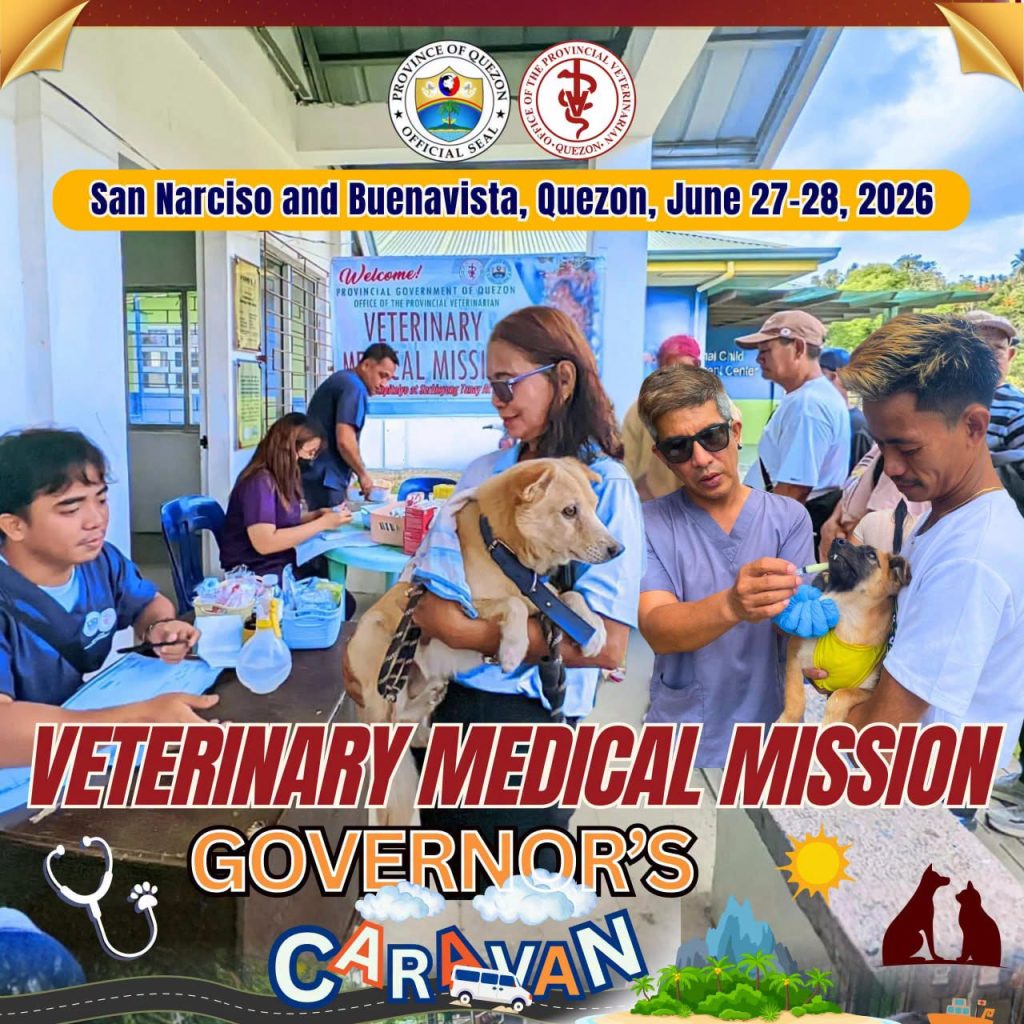
A news release from the Quezon Public Information Office on June 30, 2026 highlighted the Provincial Government’s Veterinary Medical Mission conducted through the Office of the Provincial Veterinarian under the Governor’s Caravan program.
The initiative delivered essential animal health and veterinary services to residents of Plaridel, Buenavista, and San Narciso, reinforcing the provincial government’s commitment to animal welfare, disease prevention, and public health. The program included rabies vaccination, animal consultations, and disease surveillance activities aimed at promoting the well-being of livestock and companion animals across the three municipalities.
Following the confirmation of an animal rabies case in Barangay M.L. Tumagay (Poblacion), Plaridel, veterinary officials, in partnership with the local government unit, launched an intensive rabies vaccination drive from June 23 to 25, 2026. To help contain the disease and prevent further transmission, a two-day ring vaccination campaign was conducted within the designated infected and buffer zones, successfully vaccinating 363 dogs and cats.
The veterinary team also conducted routine African Swine Fever (ASF) surveillance to support Plaridel’s efforts to regain its Recognition of Active Surveillance for ASF (RAS ASF). This initiative aims to strengthen disease monitoring among swine populations and safeguard the local livestock sector from ASF outbreaks.
Meanwhile, free veterinary services were extended to residents of San Narciso and Buenavista during the Governor’s Caravan held on June 27–28, 2026. A total of 66 dogs and cats received anti-rabies vaccinations, while 3,121 animals benefited from consultations and other veterinary interventions. The activity directly served approximately 170 residents.
These efforts underscore the provincial government’s ongoing dedication to promoting animal welfare and protecting public health. They also reflect the value of swift response measures, inter-agency collaboration, and community involvement in preventing animal diseases and ensuring the well-being of both animals and people /Lee Amion